Sabtu, 14 Desember 2019

Farewell, Tiger! Australia prepares to say goodbye to the U.S. playing captain for good - Golf.com

MELBOURNE, Australia – It’s time to address the Big Cat in the room. These words are difficult to write, especially for an Australian writer. But here goes…

The Sunday singles finale to the Presidents Cup is likely to be the last time Tiger Woods plays tournament golf in Australia.

Woods, the U.S. Team’s playing captain, will cap arguably the greatest edition in the 25-year history of this biennial contest with a match against International rookie Abraham Ancer. There is a good chance it will be the last time the golf world gets to see Woods, the artist, use Alister MacKenzie’s famed Royal Melbourne as his canvas. At least under the pressure of a tournament.


Why? For one thing, Woods missed out on automatic qualification for this year’s Cup. He was fortunate to have a self-pick up his sleeve and, thankfully, the choice was easy when he won a record-equalling 82nd PGA Tour title in Japan in late October. Gosh, we’re lucky he did — but there’s no guarantee he’ll do the same in the future.

The American team keeps getting replenished with studs like Patrick Cantlay and Xander Schauffele, rookies this week. In years to come, young guns like Matt Wolff and Collin Morikawa will fill out the team.

Secondly, the Presidents Cup won’t return to Australia until at least 2027, when Woods will be 51. The 2021 Cup is at Quail Hollow and TPC Harding Park in 2025 are the only confirmed venues. The 2023 edition is likely to be held in Asia.

It has been eight years since Woods played Down Under – when he was here for the 2011 Cup and Australian Open. It is getting harder and harder for Woods to make special trips to Australia with a PGA Tour schedule that encompasses nearly the entire calendar year. Finally, the Australian Open’s spot on the schedule — it’s usually held during the week of Thanksgiving in the U.S. — runs up against Woods’ Hero World Challenge held in the Bahamas in early December.

It’s heartbreaking to consider the possibility that Sunday at Royal Melbourne is Woods’ competitive swan song in Australia. The fans down here have relished every minute of the six trips he’s made. And hasn’t he been so glorious to watch this week?

Consider that beautifully-flighted, sawed-off short iron draw he threw into the 18th hole in Friday’s foursomes match. It left his club like a laser but landed like a butterfly with sore feet, setting Justin Thomas up for a birdie to win their match. The pair’s subsequent celebration will go down in Presidents Cup folklore.

Remember at the par-3 5th during Thursday’s four-ball, when the 15-time major winner hit a bump-and-run from a nasty lie between two greenside bunkers that dropped obediently into the hole for birdie? It was so exquisite that teammate Thomas had no issues with Woods channeling Jordan Spieth and telling his partner, “go get that!”

Those are just the two most recent additions to a long highlight reel of Woods on the Melbourne Sandbelt.

His obsession with the revered Aussie golf region began in 1997. The Californian made his first trip to Melbourne’s Sandbelt – his second to Australia after the 1996 Aus Open – to contest the Australian Masters at Huntingdale Golf Club. He tied for a respectable eighth.

That was in February – two months before he’d secure an historic win at another Masters. You know, the one at Augusta National.
Thousands of fans lined the fairways of Huntingdale to get a glimpse of the chosen one who they’d read about in magazines and newspapers — well before social media, of course.

They’d heard of his fearsome power, but Woods only hit one driver in the opening round. As a local reporter detailed at the time, “A graphic impression of the slightly built young man’s power was provided with almost every shot. At the par-5 14th, at 554 metres (605 yards) one of the longest in Australian tournament golf, Woods humbled the hole with a 3-wood and 2-iron.”

The fan stampede synonymous with Tigermania was in its infancy in 1997, but already annoying fellow pro golfers. In the same Aussie Masters, local pro Brett Ogle, himself a two-time PGA Tour winner, snapped to fans chasing Woods: “Tiger’s not the only one playing out here.”

Maybe not. But Woods is perhaps the only golfer who captures the imagination of Australians who don’t even play golf.

Woods’ next trip to the Sandbelt came in 1998, when in his Presidents Cup debut he demanded captain Jack Nicklaus send him out on Sunday face local star Greg Norman in the singles at Royal Melbourne. Woods beat the Shark on the 18th hole, but the International team secured their only Cup victory to date.

The pinnacle of Woods’ Sandbelt history came in 2009 when he picked apart the world-renowned Kingston Heath en route to a meaningful Australian Masters victory. Although his first appearance in Australia in 11 years cost the Victorian state government a reported $3 million, Woods justified the spend by wowing fans with beautifully-crafted golf shots while leading from start to finish. He added the now-defunct tournament’s gold jacket to the green jackets already in his wardrobe.

Ten years later, Aussie fans have jumped at the chance to see the reigning Masters champion tackle Royal Melbourne while in vintage form.

Among those in the crowd was Alex Gough, a New York-based Australian who made the 10,000-mile journey home from his Brooklyn residence just to see Woods. Gough, 32, has been a member of Royal Melbourne since 2008 and was on hand to witness Woods at the 2011 Cup.

But this time is different, says Gough.

“I was there in 2011 … it was cool, but Tiger hadn’t won in two years. This Presidents Cup has so much more pop in it with him playing so well.

“The way Tiger carves his irons around Royal Melbourne is so impressive. He knows exactly where to hit it and where to miss it.

“I went out and watched the (2001) WGC-Match Play at (nearby) Metropolitan GC as an introduction to golf. But Tiger was the catalyst for getting me out and taking up the sport.
Gough is just one of 30,000 fans who have been cramming in to Royal Melbourne each day to get a glimpse of Woods.

“To see him 20 years after I first picked up a club, and still dominating, is so special. I’ll tell my grandkids one day that I saw Tiger Woods in person.”

Sunday may be the last time they get to do so. I hope it isn’t. I want to be wrong. I want to look like a fool and Woods to announce next year that he’ll play the 2020 Australian Open at nearby Kingston Heath.

But it least today will be momentous. If Woods beats Ancer, his 27th match victory will take the outright Cup record.

“Wouldn’t that be the perfect bow to tie on his professional career in Australia?” Gough ponders.

It sure would. Let’s just hope the match goes all the way to the 18th.

To receive GOLF’s all-new newsletters, subscribe for free here.

Let's block ads! (Why?)


https://news.google.com/__i/rss/rd/articles/CBMiTmh0dHBzOi8vd3d3LmdvbGYuY29tL25ld3MvY29sdW1ucy8yMDE5LzEyLzE0L3RpZ2VyLXdvb2RzLWZhcmV3ZWxsLWF1c3RyYWxpYW5zL9IBUmh0dHBzOi8vd3d3LmdvbGYuY29tL25ld3MvY29sdW1ucy8yMDE5LzEyLzE0L3RpZ2VyLXdvb2RzLWZhcmV3ZWxsLWF1c3RyYWxpYW5zL2FtcC8?oc=5

2019-12-14 10:18:45Z
CBMiTmh0dHBzOi8vd3d3LmdvbGYuY29tL25ld3MvY29sdW1ucy8yMDE5LzEyLzE0L3RpZ2VyLXdvb2RzLWZhcmV3ZWxsLWF1c3RyYWxpYW5zL9IBUmh0dHBzOi8vd3d3LmdvbGYuY29tL25ld3MvY29sdW1ucy8yMDE5LzEyLzE0L3RpZ2VyLXdvb2RzLWZhcmV3ZWxsLWF1c3RyYWxpYW5zL2FtcC8

Jumat, 13 Desember 2019

Rachel Noble to be Australia's first female intelligence chief - Al Jazeera English

Prime Minister Scott Morrison on Friday appointed Rachel Noble as the first woman to head a major Australian spy agency.

Noble will become next director-general of the Australian Signals Directorate (ASD), which intercepts electronic communications from foreign countries.

"Her appointment to this leadership role is a significant step forward for women in the national security sector and we congratulate her," Morrison and Minister for Defence Linda Reynolds said in a statement.

Noble, who will begin her new role in February 2020, will lead the ASD at a time when Australia is increasingly concerned about cyber-attacks.

She replaces Mike Burgess, who was appointed as the new director-general of the Australian Security Intelligence Organisation (ASIO).

In March, the ASD concluded that China’s Ministry of State Security was responsible for a cyber-attack on its parliament and three major political parties, Reuters reported.

Australia decided not to go public with its findings for fear of risking its trade ties with China, two sources said.

China denies it was responsible for the hack.

SOURCE: Al Jazeera and news agencies

Let's block ads! (Why?)


https://news.google.com/__i/rss/rd/articles/CBMicmh0dHBzOi8vd3d3LmFsamF6ZWVyYS5jb20vbmV3cy8yMDE5LzEyL3JhY2hlbC1ub2JsZS1uYW1lZC1hdXN0cmFsaWEtZmVtYWxlLWludGVsbGlnZW5jZS1jaGllZi0xOTEyMTMwNTE5NTQ4NDQuaHRtbNIBdmh0dHBzOi8vd3d3LmFsamF6ZWVyYS5jb20vYW1wL25ld3MvMjAxOS8xMi9yYWNoZWwtbm9ibGUtbmFtZWQtYXVzdHJhbGlhLWZlbWFsZS1pbnRlbGxpZ2VuY2UtY2hpZWYtMTkxMjEzMDUxOTU0ODQ0Lmh0bWw?oc=5

2019-12-13 05:45:00Z
52780492824938

Selasa, 10 Desember 2019

Sydney choked by hazardous haze from Australia bush fires - The Associated Press

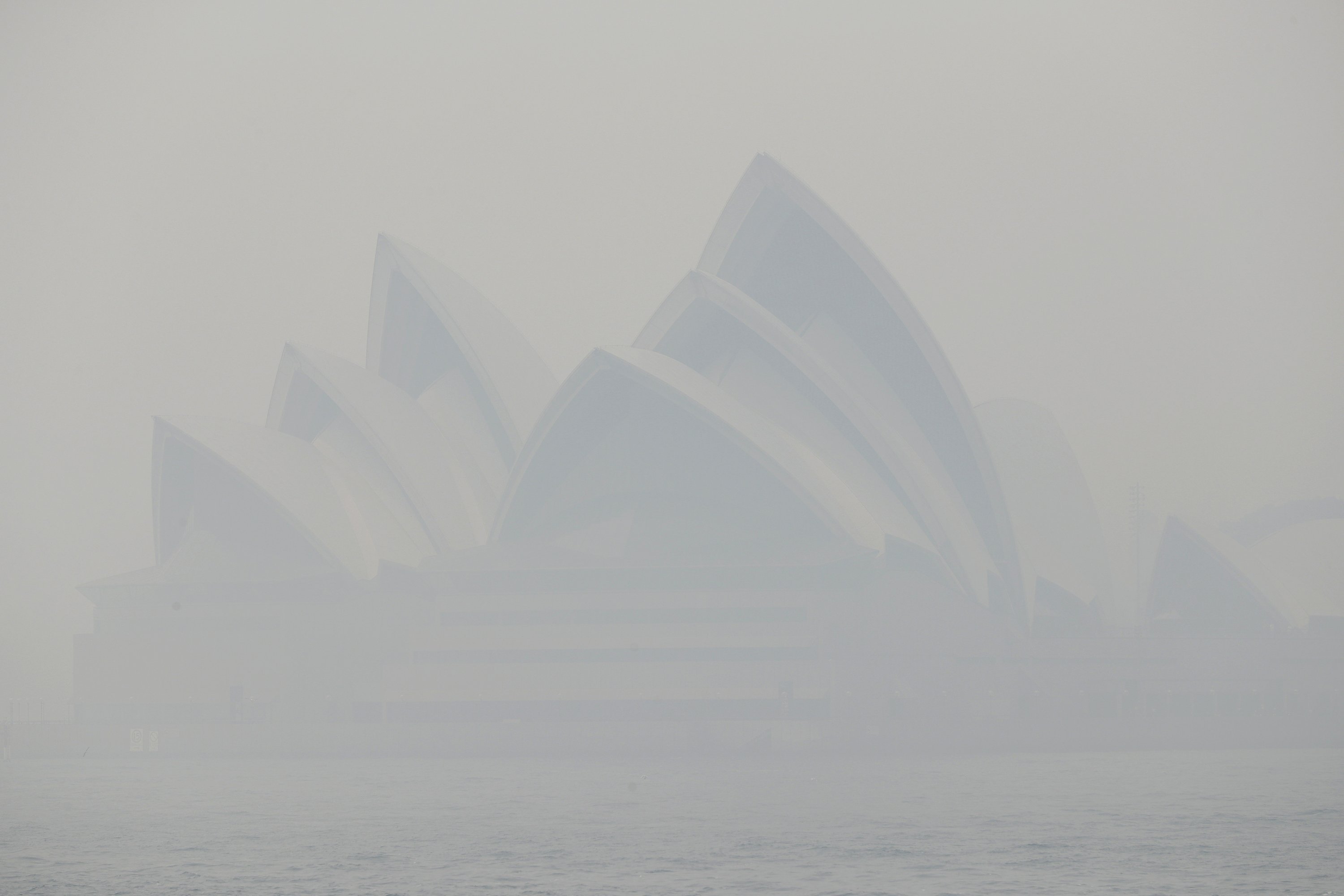
SYDNEY (AP) — Wildfires engulfed the Australian city of Sydney on Tuesday in haze so thick in some places it was 11 times worse than the level considered “hazardous,” and was apt to trigger fire alarms.

The city canceled ferries and some offices in the downtown area were evacuated.

Local health officials advised people to stay indoors as much as possible and those with heart and lung problems were told to avoid all outdoor activity.

“The smoke here in Sydney is extremely bad today, it is some of the worst air quality we’ve seen,” Richard Broome of New South Wales Health told reporters.

“We are just urging people once again to take these (conditions) seriously,” Broome said.

Ambulances have been answering dozens of respiratory-related calls a day, said the head of NSW Ambulance, Brent Armitage.

Sydney Trains warned that fire alarms at train stations might be set off by the thick smoke drifting into the city from fires ringing Sydney.

The regional environmental department said the air quality index, or AQI, in some parts of the city was more than 11 times the 200 reading considered hazardous.

Given the dire air quality, workers should not be forced to toil on outdoor job sites while the haze persists, said Unions NSW’s assistant secretary, Thomas Costa.

“Toxicity is very, very high,” Costa said.

Winds from the north were pushing the smoke into the city, overpowering coastal breezes. Forecasts showed the wind would likely clear the air somewhat but also will fan the brush fires.

Australia’s fire season normally peaks during the summer in the Southern Hemisphere. It started early this year after an unusually dry and warm winter. Last month, authorities reported more than 50 wildfires burning mainly in northern New South Wales.

Let's block ads! (Why?)


https://news.google.com/__i/rss/rd/articles/CBMiM2h0dHBzOi8vYXBuZXdzLmNvbS80NWJlNGQ4MTAwMDU1NmUwMGQ2YTE4YmI4NDgzMWY5MdIBAA?oc=5

2019-12-10 06:21:20Z
52780481432010

Minggu, 08 Desember 2019

Stunning video shows 'firenado' burn across Australia - CNN

[unable to retrieve full-text content]

Stunning video shows 'firenado' burn across Australia  CNN
https://news.google.com/__i/rss/rd/articles/CBMiX2h0dHBzOi8vd3d3LmNubi5jb20vdmlkZW9zL3dlYXRoZXIvMjAxOS8xMi8wOC9hdXN0cmFsaWEtYnVzaGZpcmUtZmlyZW5hZG8tcXVlZW5zbGFuZC1uci12cHguY25u0gFjaHR0cHM6Ly9hbXAuY25uLmNvbS9jbm4vdmlkZW9zL3dlYXRoZXIvMjAxOS8xMi8wOC9hdXN0cmFsaWEtYnVzaGZpcmUtZmlyZW5hZG8tcXVlZW5zbGFuZC1uci12cHguY25u?oc=5

2019-12-08 12:04:26Z
CAIiEI8yHquiLxNvW56A3TPxJ7kqGQgEKhAIACoHCAowocv1CjCSptoCMI29pgU

Terrifying shark attack leaves Australian snorkeler with serious flesh wounds to arm - Express.co.uk

Peter O’Halloran had decided to go out snorkelling in the popular holiday spot of Exmouth on Australia’s Western coast. He was about 400 metres from the Exmouth marina when the terrifying attack happened. The shark’s razor sharp teeth ripped through the flesh on Mr O’Halloran’s arm, before swimming off.

Mr O’Halloran was flown to Perth for treatment and was operated on by surgeons.

Fortunately the injuries were not life threatening and the intrepid snorkeler is expected to make a full recovery.

Mr O’Halloran displayed his injuries to journalists.

Showing the media an X-ray of his wounds, he said: “It goes right through the meat.

“They said there was a bit of bone missing. That’s right through the top, through all the meat there.”

When asked whether it was painful, he cooly replied: “Nah, not a problem.”

The 57-year-old has been swimming in the Exmouth waters for many years and admitted that the thought of being attacked by sharks was always in the back of his mind.

Investigators are still trying to work out which type of shark attacked the swimmer.

JUST IN: Horrifying shark attack sparks fear as 12ft giants are spotted 

A Queensland Ambulance Service spokesman said: “It is unknown what caused the laceration to his foot, the patient reports he was struck in the chest by the shark but not bitten.

“It is understood the patient did make his own way home and then he and his partner began to drive towards Bundaberg Base Hospital.”

This latest incident adds fuel to the fire of those concerned over the safety of swimmers in the popular tourist region.

Fishermen working for local authorities have caught 22 sharks in waters around the Great Barrier Reef in culls over the past few years, including a massive 11.5ft tiger shark.

However, the state government abandoned its catch-and-kill policy last September, after it lost a Federal Court appeal to use bait hooks to catch the sharks.

A Humane Society challenge to the baiting was upheld and an appeal against the Administrative Appeals Tribunal was turned down.

Queensland’s state government had organised the culls, so as to protect swimmers at 27 beaches within the Great Barrier Reef Marine Park.

The state’s premier Annastacia Palaszczuk said after the ruling that: “We fought this in the courts because we simply believe that human life must be prioritised over the lives of sharks.

“The decision effectively means that the programme would become a catch-and-release programme within the marine park.”

Let's block ads! (Why?)


https://news.google.com/__i/rss/rd/articles/CBMifGh0dHBzOi8vd3d3LmV4cHJlc3MuY28udWsvbmV3cy93b3JsZC8xMjE0NDY5L3NoYXJrLW5ld3MtbGF0ZXN0LWV4bW91dGgtcGVydGgtd2VzdGVybi1hdXN0cmFsaWEtZ3JlYXQtYmFycmllci1yZWVmLXF1ZWVuc2xhbmTSAYABaHR0cHM6Ly93d3cuZXhwcmVzcy5jby51ay9uZXdzL3dvcmxkLzEyMTQ0Njkvc2hhcmstbmV3cy1sYXRlc3QtZXhtb3V0aC1wZXJ0aC13ZXN0ZXJuLWF1c3RyYWxpYS1ncmVhdC1iYXJyaWVyLXJlZWYtcXVlZW5zbGFuZC9hbXA?oc=5

2019-12-08 01:31:00Z
CBMifGh0dHBzOi8vd3d3LmV4cHJlc3MuY28udWsvbmV3cy93b3JsZC8xMjE0NDY5L3NoYXJrLW5ld3MtbGF0ZXN0LWV4bW91dGgtcGVydGgtd2VzdGVybi1hdXN0cmFsaWEtZ3JlYXQtYmFycmllci1yZWVmLXF1ZWVuc2xhbmTSAYABaHR0cHM6Ly93d3cuZXhwcmVzcy5jby51ay9uZXdzL3dvcmxkLzEyMTQ0Njkvc2hhcmstbmV3cy1sYXRlc3QtZXhtb3V0aC1wZXJ0aC13ZXN0ZXJuLWF1c3RyYWxpYS1ncmVhdC1iYXJyaWVyLXJlZWYtcXVlZW5zbGFuZC9hbXA

Jumat, 06 Desember 2019

Australia Burns Again, and Now Its Biggest City Is Choking - The New York Times

SYDNEY, Australia — Flying into Sydney usually brings stunning views of rocky cliffs and crystal waters, but when Anna Funder looked out the window before landing this week, she saw only tragedy.

Thick gray smoke blanketed the skyline and the coast, stretching for miles from the fire front at the southwestern edge of the city, where dried-out forests have been burning for weeks.

“I’ve never seen anything like it,” said Ms. Funder, an award-winning Australian novelist known for stories of cruelty and resistance. “It was this huge and terrible seam of white smoke coming up from the ground beyond which the rest of the continent — where I was headed, where my home is — was invisible.

“It was as if the country were being devoured by a chemical reaction.”

Sydney, nicknamed the “Emerald City” for its subtropical beauty, is struggling with a summer of choking smoke. Bush fires raging to the north, south and west since early November have pushed smoke and ash not just into neighborhoods abutting the blazes, but all the way to coastal suburbs more than 50 miles away.

All of us who live here can taste the fire and feel it in our throats. Asthmatics are showing up in emergency rooms in greater numbers. Schools are canceling sports and recess. In houses built to be open to the elements, people are taping their windows shut; there have even been reports of fire alarms in office buildings set off by the smoke from miles away.

And the impact of this year’s wildfire season, which began much earlier than usual, goes beyond the physical. Rising levels of angst and anger are emerging all over Sydney, spreading like the haze.

As many here see it, Australia’s conservative government, in refusing to address the threat of climate change, is favoring the country’s powerful fossil fuel industry over its largest city, as well as the rural areas where fires have already destroyed hundreds of homes.

Psychologists describe a creeping sense of impotence and dread.

“The stress based on the fact that thick smoke can accelerate pre-existing cardiovascular conditions is one thing,” said Frans Verstraten, who holds the McCaughey Chair of Psychology at the University of Sydney. “But the other kind of stress, based on the realization that there is not much we can do — helplessness; the realization that you can’t do anything about it — makes it worse.”

On social media, the sharing of images of #sydneysmoke in its many shades, from orange to gray, has become a regular feature of people’s morning routines.

Others have taken to posting photos of burned leaves that show up far from the fires, or of the darkened sun, looking as toxic and red as the blazes themselves.

In diagnostic detail, they have described how it feels to deal with the extended reach of the infernos, which are large enough to be seen from space — and are even turning glaciers in New Zealand pink.

State officials have warned of the dangers. The New South Wales Office of Environment and Heritage said that “our network has recorded some of the highest air pollution ever seen” in the state.

In November, the department recorded 15 days of poor air quality, far beyond the monthly norm. On Monday, the levels of PM2.5, the most harmful form of pollutant, were 22 times the accepted safety level — the equivalent of smoking more than a pack of cigarettes a day. Pollution levels were expected to reach similar heights on Friday.

Even compared to the terrible fire seasons of 1994 and 2001, “this event,” state officials said, “is the longest and the most widespread in our records.”

With fires also raging in the state of Queensland, that means the pressure on Australia’s government is likely to intensify.

Climate protests have become more common. At rallies, longtime activists are increasingly being joined by newcomers like Emily Xu, a 13-year-old student who skipped school to attend a protest on Nov. 29 in downtown Sydney.

She and a handful of her friends, all in school uniforms, said it was their first rally, and that they had made the trek because the fires had suddenly made climate change’s threats more real for them.

“Before I was like, ‘Oh, if we don’t have coal we won’t make any money for our economy,’” said Ms. Xu. Now, she said, fires were approaching her house and her friends’ houses, making her less worried about the economy than about survival.

Ms. Funder, the novelist, said the failure to address climate change was especially hard for her three children, who are 10, 15 and 17, to understand.

“I can’t explain this to my children in a way that makes adults seem like sane, moral actors,” she said. “In this story, that’s not what we are. Although in every other way we try to look out for them and their future, in this story our failure is literally choking them, keeping them indoors at school.”

In some countries, such widespread environmental effects have led to changes in policy.

Activists angry about pollution in Mexico City pushed the government to impose tougher regulations for vehicle emissions. Many academics believe China’s quick pivot to renewables in recent years was a response to air pollution and citizens’ growing concerns about its impact.

In Australia, however — where the air in Sydney was ranked among the worst in the world last month — Prime Minister Scott Morrison has resisted.

“The response has been to double down on denialism,” said David Schlosberg, director of the Sydney Environment Institute at the University of Sydney.

Instead of addressing the public’s concerns, Mr. Morrison has suggested that some forms of protest should be outlawed, while refusing to meet with retired firefighters who have warned for months that more resources are desperately needed to battle the blazes.

On Friday, Mr. Morrison merely acknowledged that the haze in Sydney “has been very distressing to people.” He recommended downloading an app that tracks the fires.

Asked about a new report questioning Australia’s stewardship of the Great Barrier Reef, which is being killed by climate change, he repeated a false assertion that Australia’s carbon emissions are declining (scientists have shown that they are still rising).

Some critics are starting to wonder how long the government’s position can last.

“I really don’t see how this governmental attack on genuine concerns, coupled with a lack of action on both emissions and adaptation policies, can stand for much longer — especially in the face of increasing disasters and emergencies,” Mr. Schlosberg said.

At the very least, the smoky conditions are forcing everyone to question their assumptions about Sydney, where fresh air and ocean breezes are treated as a daily birthright.

At the top of Sydney Tower, the city’s tallest building, Chinese tourists said they were shocked by how little they could see.

In Hyde Park, a few blocks away, Julian deCseuz, 75, sat on a bench with a mask over his face. After a few hours of use, the white cotton was already a shade of dusty brown.

“Australia has always had a bush fire problem, but I’ve never seen it this bad,” he said. “I’ve been to Beijing and to Delhi, and it’s very similar conditions.”

Isabella Kwai contributed reporting.

Let's block ads! (Why?)


https://news.google.com/__i/rss/rd/articles/CBMiRGh0dHBzOi8vd3d3Lm55dGltZXMuY29tLzIwMTkvMTIvMDYvd29ybGQvYXVzdHJhbGlhL3N5ZG5leS1maXJlcy5odG1s0gFIaHR0cHM6Ly93d3cubnl0aW1lcy5jb20vMjAxOS8xMi8wNi93b3JsZC9hdXN0cmFsaWEvc3lkbmV5LWZpcmVzLmFtcC5odG1s?oc=5

2019-12-06 08:12:00Z
52780460599411

Kamis, 05 Desember 2019

New Zealand's glaciers are turning red - and it's because of Australia's bushfires - CNN

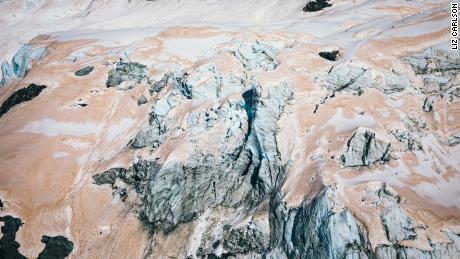
Travel photographer and blogger Liz Carlson snapped the pictures of the discolored snow-capped glaciers on November 28 while on a helicopter flight around Mount Aspiring National Park, in New Zealand's South Island.
"After we flew deep into the park around the Kitchener Glacier, I could really see how red it was, and it was shocking, I've never seen anything like it before," Carlson told CNN.
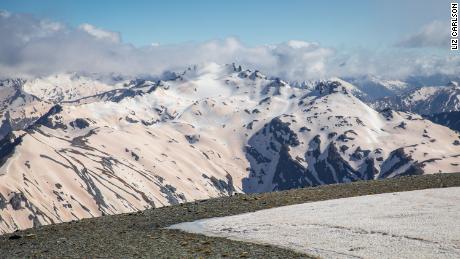
"Often at the end of summer the glaciers can appear dirty, even gray with all of the snowmelt and bits of black rock on them, but this was the height of spring so it was really bizarre."
A glacier turning red in Mount Aspiring National Park.
"The ice was coated in a way that gave it a pinkish-red tinge," she added.
Australia has been experiencing one of its worst bushfire seasons on record. As of Thursday, there were more than 117 bush and grass fires with more than 60 not yet contained, according to the New South Wales Fire Service.
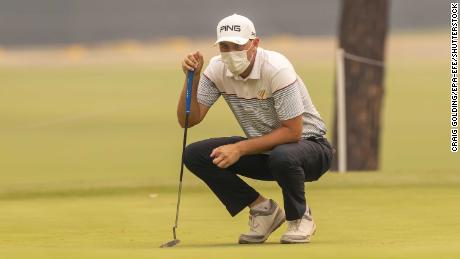
Bushfire smoke wreaks havoc at Australian golf tournament
Westerly winds blew the smoke from the Australian fires toward New Zealand.
The heavier particles in the smoke fall out and, in this case, discolored the snow in New Zealand, according to CNN meteorologist Monica Garrett.
Until the material on the glaciers is tested, it is not possible to know for sure what material it is, Garrett said.
Travel photographer and blogger Liz Carlson took the pictures of the pink and red glaciers during a helicopter flight.
Given the conditions of the past few months, it is safe to assume that it is from the Australia fires, she added.
Satellite pictures on Wednesday show smoke from the fires in eastern New South Wales crossing the Tasman Sea and the North Island of New Zealand. New South Wales and Mount Aspiring National Park are more than 1,000 miles apart.
The smoke and dust from the fires also turned the skies red and orange in New Zealand.
Carlson, who lives in Wanaka, said she was saddened by the sight of the red glaciers. "The wildfires in Australia are immense and unprecedented (and) are definitely exacerbated by climate change," she said.
"On top of that I know that our poor struggling glaciers don't need this. They're already melting too fast and... this coating of red dust on them means they won't be able to reflect light off them and will melt all the faster. It's deeply upsetting."
While it's too early to say exactly how the particles will affect the glaciers photographed by Carlson, scientists have found that forest fires in the Amazon have caused glaciers in the Andes mountains to melt faster, with pollutants such as black carbon and dust lodged in the ice, reducing the glacier's ability to reflect sunlight.
Australia's Bureau of Meteorology said on Monday that spring 2019 was the country's driest on record.

Let's block ads! (Why?)


https://news.google.com/__i/rss/rd/articles/CBMiamh0dHBzOi8vd3d3LmNubi5jb20vMjAxOS8xMi8wNS9hdXN0cmFsaWEvYXVzdHJhbGlhLWJ1c2hmaXJlcy1uZXctemVhbGFuZC1nbGFjaWVycy1zY24tc2NsaS1pbnRsL2luZGV4Lmh0bWzSAW5odHRwczovL2FtcC5jbm4uY29tL2Nubi8yMDE5LzEyLzA1L2F1c3RyYWxpYS9hdXN0cmFsaWEtYnVzaGZpcmVzLW5ldy16ZWFsYW5kLWdsYWNpZXJzLXNjbi1zY2xpLWludGwvaW5kZXguaHRtbA?oc=5

2019-12-05 12:17:00Z
CBMiamh0dHBzOi8vd3d3LmNubi5jb20vMjAxOS8xMi8wNS9hdXN0cmFsaWEvYXVzdHJhbGlhLWJ1c2hmaXJlcy1uZXctemVhbGFuZC1nbGFjaWVycy1zY24tc2NsaS1pbnRsL2luZGV4Lmh0bWzSAW5odHRwczovL2FtcC5jbm4uY29tL2Nubi8yMDE5LzEyLzA1L2F1c3RyYWxpYS9hdXN0cmFsaWEtYnVzaGZpcmVzLW5ldy16ZWFsYW5kLWdsYWNpZXJzLXNjbi1zY2xpLWludGwvaW5kZXguaHRtbA